Don't let one party ruin things with your neighbours
More and more people are learning to hate short-term rentals for one reason: noise. One late-night party means sleepless neighbours, a complaint to the building association and sometimes the police — and a big party can do damage that costs more than a whole month of rental income. The party detector spots the early signs — noise during quiet hours, too many people, smoke, fast-rising CO₂ — and warns the guest first: an SMS, a local siren and, if needed, an automated phone call. You only hear about it if the problem continues. No cameras, no audio recording.
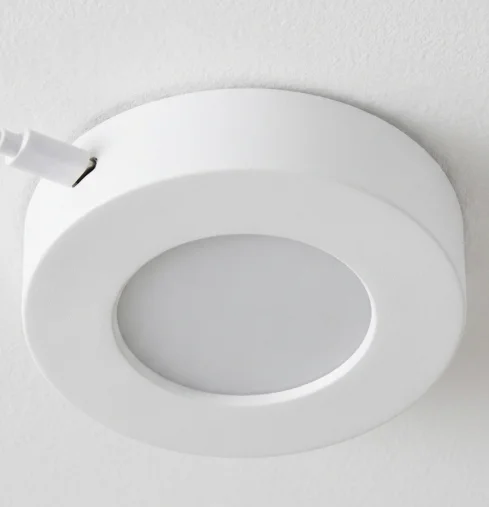
How the party detector keeps neighbours happy and the flat intact
Your neighbours stop doing the monitoring for you
By the time a neighbour has to knock on the door at 2 a.m., the relationship is already damaged — and the next step is a complaint to the building or the city. The party detector steps in first: the guest gets a polite warning as soon as noise stays above your quiet-hours limit. All the neighbours notice is that nothing is heard from your flat.
Noise in decibels, with quiet hours
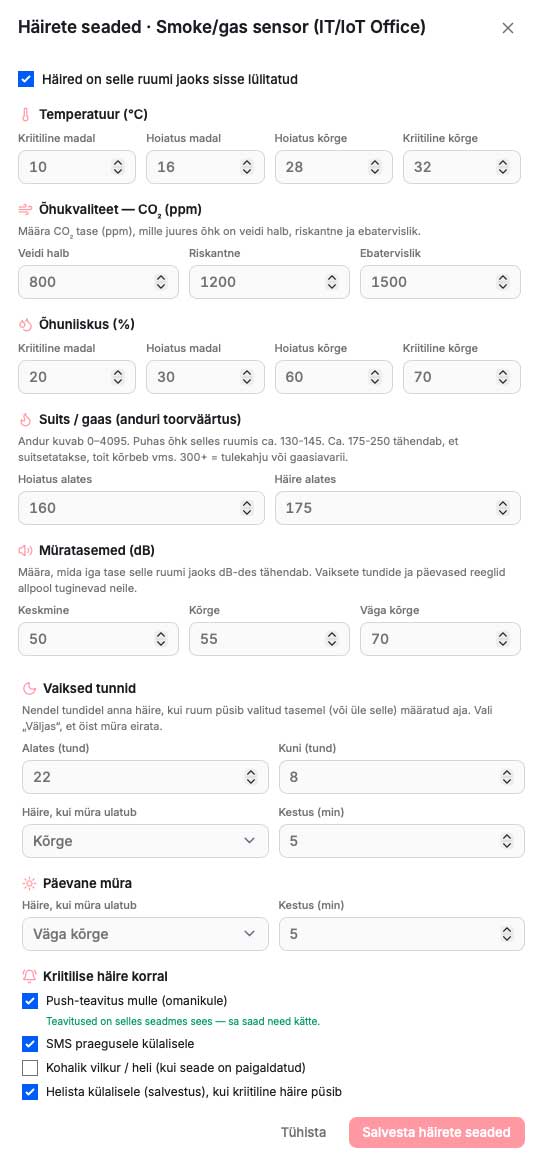
The sensor measures sound level, not words. Each room gets its own levels — medium, high, very high — plus separate rules for quiet hours (e.g. 22–8) and daytime. An alert fires only when noise stays at the chosen level for a set time, say 5 minutes, so a single loud laugh or slammed door bothers nobody.
Smoke, CO₂, temperature and humidity
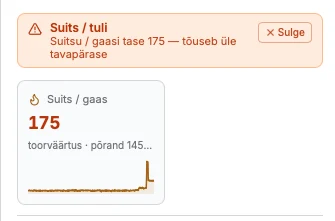
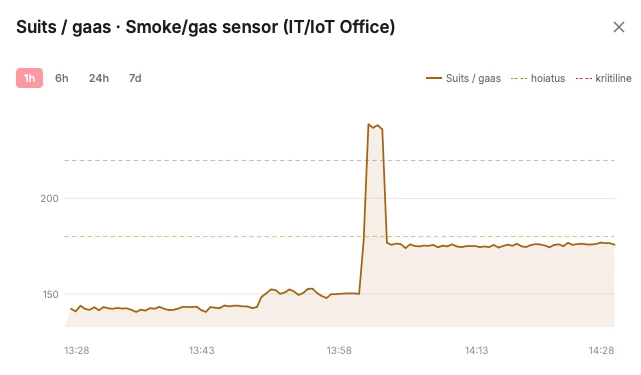
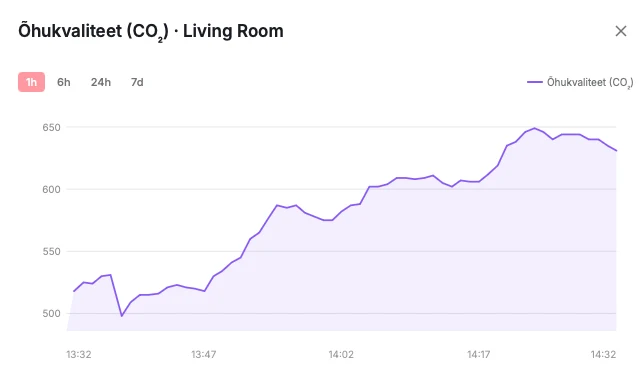
The same device detects smoke and gas and measures CO₂, temperature and humidity. Smoking indoors, a packed stuffy party or windows left open in winter show up right away, not at the next cleaning — saving your heating bill and your furniture.
Escalating alerts — the guest before you
On a critical alert the current guest gets an SMS, a local light or sound can go off in the flat, and if the alert persists the system calls the guest with a recorded message. You get a push notification. Most parties end at the first message, because people behave differently once they know they have been noticed.
Calibrated for your own room
A city flat and a country house do not sound the same. Headcount and noise can be calibrated and every room gets its own alert thresholds, so an alert always means a real problem. Every reading is time-stamped — if a deposit is ever disputed, you have a chart, not a guess.
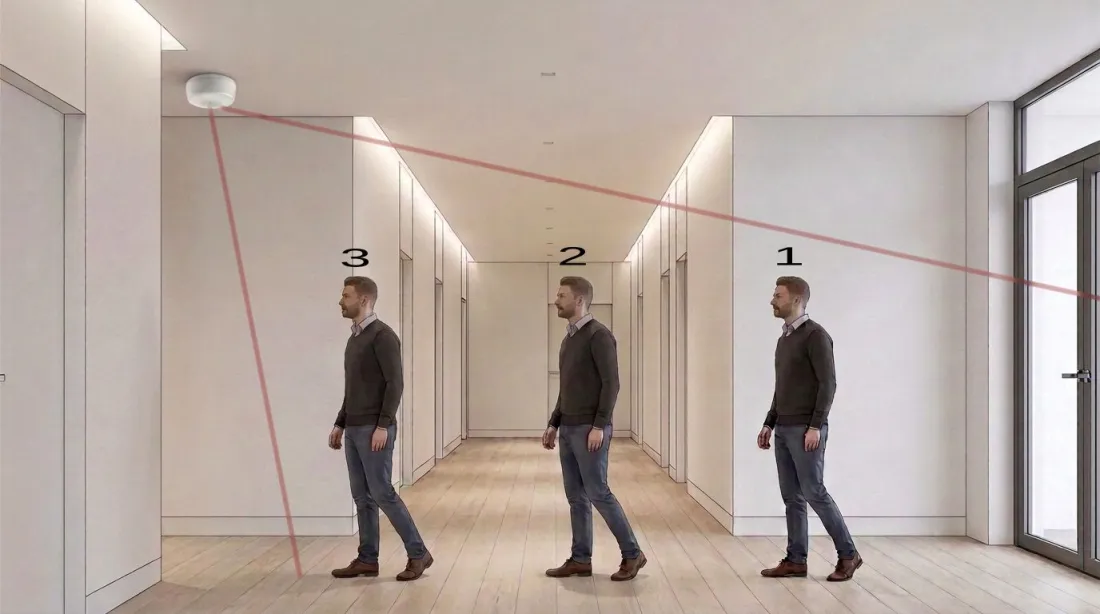
Radar counts how many people walked in — and how many walked out
A radar sensor on the ceiling above the door notices every person who passes through and knows which way they went — in or out. That gives you an exact count of how many people are in the flat at any moment, with no camera and without identifying anyone: radar sees movement, not faces. If the booking was for two but ten walked in over the evening, you get an alert straight away. The number of Bluetooth and Wi-Fi devices and the rise in CO₂ confirm the picture, so a single miscounted step never triggers an alarm.
What it looks like in the app
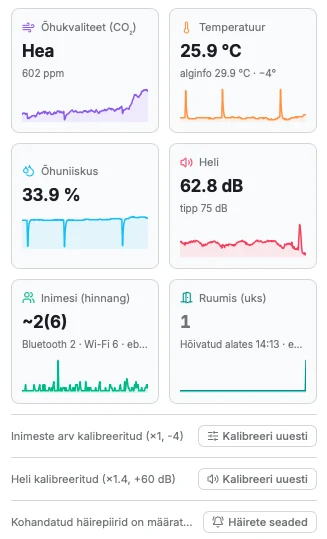
Real screenshots from the EZYsmart app (Estonian UI): see what is happening in a room at a glance, with every alert threshold set by you.
Saturday, 23:40 — and the neighbour never had to knock
A two-bedroom flat in the city centre, booked for two. At 23:40 noise rose above the quiet-hours limit and stayed there for five minutes; at the same time the sensor counted eight phones and CO₂ started climbing fast. The guest automatically got a polite SMS: quiet hours have started, please turn the music down. Noise dropped for ten minutes, then rose again — this time a warning light flashed in the flat and the system called the guest with a recorded message. The owner got a push notification and could see on the chart that after the call both noise and headcount really did drop. The neighbour slept through the night, no complaint reached the building association and nothing was broken in the morning. Before, the owner would have heard about the party on Monday — from an angry neighbour or the head of the association.
Related solutions
Party detector — answers
Does the party detector record guest conversations?
No. The sensor only measures sound level in decibels, not words, and no audio is recorded or sent anywhere. Headcount comes from a radar above the door that sees movement, not faces, cross-checked against the number of Bluetooth and Wi-Fi devices and CO₂ — with no camera and without identifying anyone. Your app only shows numbers and charts. Guests should be told in the booking terms that the property has noise and smoke sensors; it is honest, and on its own it already reduces parties.
How does it help me stay on good terms with the neighbours?
The neighbours’ biggest worry about short-term rentals is late-night noise, and what causes the most trouble is that nobody reacts. The party detector reacts within minutes: the guest is warned as soon as noise stays above the quiet-hours limit, without a neighbour having to knock or call you. If a neighbour does ask, you can show the chart proving you acted at once. Many owners also tell the neighbours there is a noise sensor in the flat — that alone changes the mood.
What happens if the guest ignores the warning?
Alerts escalate, and you decide how. First the guest gets an SMS, then a local light or sound can go off in the flat, and if the critical alert persists the system calls the guest with a recorded message. You get a push notification and can watch in real time whether things calm down. If not, you can call yourself, send a final warning or, as a last resort, end access. Everything is in a time-stamped log, which also backs up keeping the deposit.
Does the sensor give false alarms?
The system reacts to a sustained pattern, not a single spike. An alert fires only when noise stays at the chosen level for the time you set, for example five minutes — a single loud laugh or a slammed door triggers nothing. Noise and headcount can be calibrated per room, and the limits differ for daytime and quiet hours. In the first week it is worth checking the charts and fine-tuning the limits; after that every alert means a real problem.
Does the party detector work with other EZYsmart devices?
Yes, and that is the main difference from stand-alone noise monitors. The party detector is part of the same system that runs smart locks, the booking calendar, heating and guest messaging. It knows who the current guest is, whom to text and when the booking ends. The same app also shows leaks, temperature and smoke, so you do not need five different apps for one flat.
Keep the neighbours happy before next Friday
Tell us about your flat or house and how often you worry about parties there — we will put together a sensor and installation quote that protects the quiet hours and the property.